


How Invisalign Attachments Work and Why They Matter
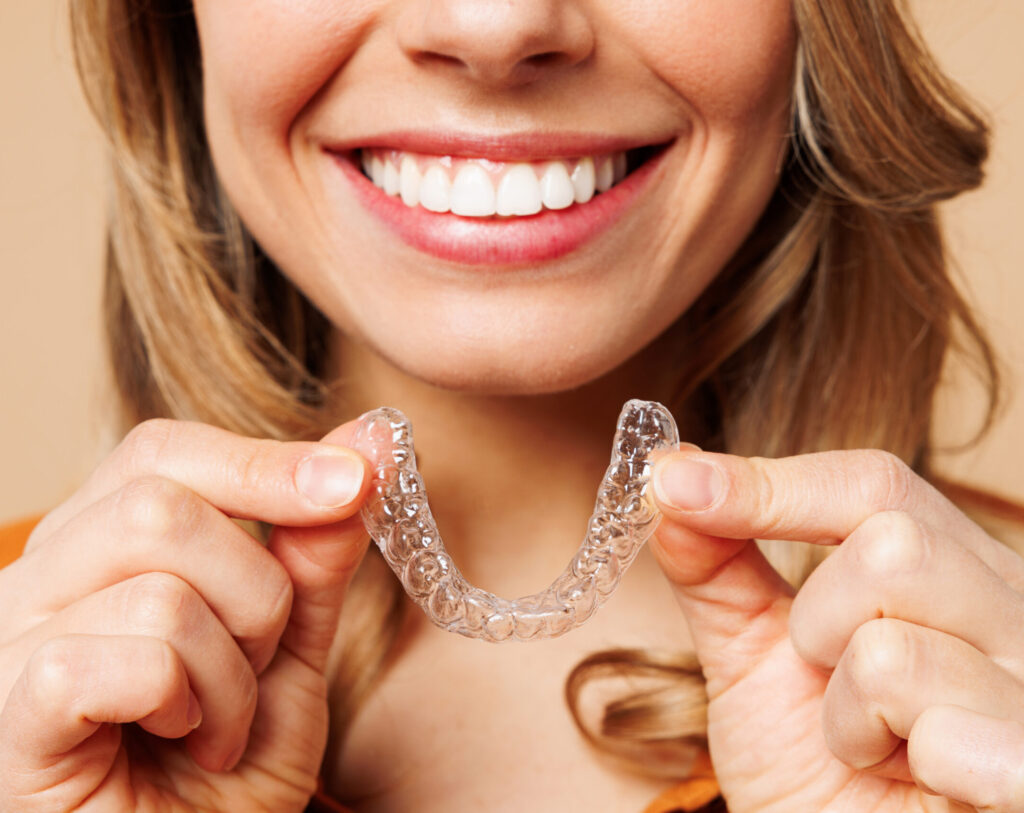
If you’ve started exploring Invisalign treatment, you’ve probably heard your orthodontist mention “attachments” or “buttons.” At first glance, they don’t sound very exciting—tiny tooth-colored bumps bonded to your teeth—but they actually play a major role in how effectively clear aligners like Invisalign can move your teeth into alignment. Without them, many treatments simply wouldn’t achieve the precision modern orthodontics requires.
Understanding how these attachments work can help you feel more confident about your treatment plan and set realistic expectations about your smile transformation.
What Invisalign Attachments Actually Are
Invisalign attachments are small, tooth-colored shapes made from dental composite resin—the same material used for white fillings. They are carefully bonded to specific teeth during your treatment. Once placed, they sit on the tooth surface and act like “handles” that your clear aligners can grip.
On their own, Invisalign aligners are smooth and flexible. That’s great for comfort and appearance, but it limits how much force they can apply in certain directions. Attachments solve that problem by giving the aligners something to push against so teeth can be guided more precisely into place.
Think of them as anchor points that make complex tooth movements possible—especially rotations, vertical movements, or shifting teeth that are stubbornly out of position.
How Invisalign Attachments Help Move Teeth
Clear aligners work by applying controlled, gentle pressure to gradually shift teeth. However, teeth don’t always move in a simple straight line. Some need to rotate, tip, or move up and down in the jaw.
This is where attachments become essential.
Once your orthodontist designs your digital treatment plan, they determine exactly where attachments should go. Each one has a specific shape and placement that corresponds to a specific type of movement. When your aligner is placed over them, it “locks in” and delivers more targeted force.
Without attachments, aligners can sometimes slip over round or difficult-to-grip surfaces. With them, the aligners gain traction—like a key fitting into a lock—allowing for much more predictable results.
In short, attachments turn Invisalign from a simple straightening system into a highly engineered tooth-moving tool.
Why Some Patients Need Attachments (and Some Don’t)
Not every Invisalign patient will need attachments, but many treatment plans include them.
If your case is mild—slight crowding or small spacing issues—you may be able to complete treatment with aligners alone. But if your teeth require more complex movement, attachments are often necessary.
Common situations where attachments are used include:
- Rotating teeth that are twisted out of position
- Moving teeth vertically (up or down)
- Closing larger gaps or correcting bite issues
- Improving control over specific teeth that resist movement
Most orthodontists plan for attachments from the beginning using digital scanning and simulation software, so they are not added randomly—they are carefully mapped to your treatment goals.
What the Attachment Process Is Like
Patients are often surprised by how simple the attachment process is. There’s no surgery, drilling into the tooth nerve, or anything invasive.
Here’s what typically happens in a professional Invisalign appointment:
Your orthodontist first cleans and prepares the tooth surface. A bonding gel is applied, followed by a template that shows exactly where each attachment should go. The composite material is placed into the template spots and hardened using a special light. Once the template is removed, the attachments remain bonded to the teeth.
The entire process is usually quick and painless, and most patients are able to continue their normal routine immediately afterward.
What Attachments Feel and Look Like in Daily Life
One of the biggest concerns people have is appearance. The good news is that attachments are designed to blend in with your teeth. They are tooth-colored and relatively small, so most people won’t notice them unless they are very close to you.
In terms of comfort, most patients adjust within a few days. You might notice slight roughness at first, especially when your aligners are out, but this typically fades quickly.
There is a learning curve when removing and inserting aligners, since the attachments create extra friction. However, once you get used to it, it becomes second nature.
Why Attachments Are So Important for Results
While Invisalign’s clear trays do the visible work of straightening teeth, attachments are often the hidden reason behind successful outcomes.
They improve:
- Precision: Allowing exact control over tooth direction
- Efficiency: Helping teeth move as planned without delays
- Predictability: Reducing unwanted movement or slippage
- Complex case capability: Making it possible to treat more advanced orthodontic issues without braces
Without attachments, many aligner treatments would be limited to only the simplest cases. With them, Invisalign becomes a powerful system capable of handling far more complex smiles.
Choosing the Right Invisalign Provider Matters
Because attachments require careful planning and precise placement, your results depend heavily on the expertise of your orthodontic provider. An experienced team ensures that attachments are placed strategically—not just technically correct, but optimized for comfort, aesthetics, and efficiency.
If you are considering Invisalign in the Everett, WA area, it’s worth working with a practice that understands both the science and artistry behind aligner treatment.
That’s where local expertise becomes especially valuable.
Silverlake Orthodontics: Schedule Your Invisalign Consultation in Everett, WA
If you’re researching Invisalign Treatment Everett, WA, or trying to understand whether clear aligners with attachments are right for you, the next step is a professional evaluation.
Silverlake Orthodontics provides personalized orthodontic care using modern Invisalign techniques, including carefully planned attachment placement for predictable results.
Whether you’re just beginning to explore Invisalign attachments, comparing clear aligners vs braces, or ready to start your smile transformation, scheduling a consultation is the best way to get a treatment plan tailored specifically to your teeth and goals.
If you’ve been searching for terms like “Invisalign Everett WA,” “clear aligners Everett,” or “Invisalign orthodontist near me,” this is the moment to take the next step.
Contact Silverlake Orthodontics today to discuss your options and find out how Invisalign attachments can help guide your treatment from start to finish.
Your smile plan starts with the right guidance—and the right team.